Monday, August 20, 2012

Week 04 - Collaboration


Trustworthy and ethical behaviour in collaboration may relate to
                            •  acknowledging discomfort or anger
                            •  being prepared to fully participate
                            •  communicating in an open way
                            •  honesty
                            •  honouring commitments
                            •  sensitivity to social, cultural, personal situations and dynamics
                            •  showing respect
                            •  understanding of the consequences of actions

        Add 2 items to the list above - then SORT the 10 items into 2 groups. 
                         1. Essential 
                         2. Secondary (give at least one example for each group)

  •           supporting and trusting collaborators
  •           having self development or self improvement
1. Essential
honouring commitments
showing respect
communicating in an open way
sensitivity to social, cultural, personal situations and dynamics
showing respect
being prepared to fully participate
supporting and trusting collaborators – For example when team members trust each other the individual has the freedom to give ideas openly without fear of the detrimental effects. This will lead to the communication in an open way and courage to face the problems very well.


2. Secondary
honesty
being prepared to fully participate
acknowledging discomfort or anger
having self development or self improvement – For example once individuals have a self development they can provide an effective working process. The development and improvement of knowledge and skills can lead to better results.


 Trust & creative partnerships - GROUP EXERCISE 


PART 1: Who’s got a Dollar?
• Demo
• Silent Reflection

1. Would you volunteer your money - that is, take risk?
 Yes, if I had got some.

2. How did you feel?
If I did it would be fine for me.

3. Did you feel a little sheepish?
No

4. What about when the ante was upped to ten dollars?
Still fine

5. Twenty?
I started to wonder what the money is for.

6. Did you think the volunteers were foolish?
No..not at all.
                          
PART 2: Eye Contact
PART 3: Eye Contact with Touch
PART 4: Proximity – comfortable / closer / further 

I felt very uncomfortable because it was the first time of this exercise. I couldn’t really stare at another one’s eyes. I did try to look at her eyes many times but every time it ended up with laughing which I think it’s what people do when they feel uncomfortable with others.

The second time of this exercise I felt a bit more comfortable than the first time because I started to know what to do with this situation but I was still a little bit nervous. I could stare at friend’s eyes but sometimes I was about to laugh.

We were standing 3-4 steps away from each other. I felt quite relaxed this time because it was not too close and not too far distance. For me my comfortable distance is 2-5 steps away (without staring at eyes). I normally keep space between myself and other people depending on who I’m talking to. With close friends and someone I know well I can stand quite close to them without uncomfortable feeling. When we’re standing in appropriate distance we can see better and talk easier and it’s also a good manner.


I wasn’t so surprised when we were told to do this. It is something that I could predict after we did the above. I felt just a little bit uncomfortable because we were standing very close and holding hands. Another friend looks so friendly and that made me feel more comfortable but sometimes I still had to try not to laugh.

I felt a bit uncomfortable because we were very close and had to stare at each other's eyes but I felt more relaxed than the first and second time of this exercise because I known what to do. Personally I always find it hard to look at someone's eyes. I can do that with just very few people so this is still pretty hard for me to keep looking at friend's eyes.

I felt fine with this distance because we were standing quite far from each other. I could look at friend’s eyes and still feel relaxed. He also looked quite relaxed and we could keep staring at each other’s eyes all the time.


 Related video for ethical behaviour 


            This video is a shot movie made by students for their project requirement. Here they present about ethical and unethical behaviour at work.  There are 2 parts in this video, one shows an example for unethical behaviour and one shows an example for ethical behaviour. From this video I can obviously see the difference between the behaviours of the two guys. The guy in part one is funny. Everything he does and his attitude are unbelievable but I think there is this kind of person in the real world.

 Reference 


Friday, August 17, 2012

Week 04 - Origination


 Reading Quiz 

Answer the following questions as succinctly as possible in your own words
1. What is the major benefit of saving time?
Saving time helps reducing time spent and changing it to the time that can be spent on something else.
2. How do designers integrate time into their products?
Apply the idea of saving time to make products better, easier to use and help saving time for comsumers.
3. Explain the relationship between making waiting shorter with making waiting more tolerable
Making waiting more tolerable makes waiting shorter. For example, if we can see the process bar when downloading files from the internet we will feel the waiting more tolerable because the move of process bar makes time run faster and it allows us to know that it’s working and how long we have to wait.
4. How can you use your timeline to increase your own efficiency as a designer?
 Timeline can be used to manage project. We can use it to help with managing time and work for example we can see the schedule of project so we know what to do first, what next, when the most important thing needs to be done and when which work should be finished.
5. Briefly outline an event or activity in which you are adept at time saving?
Doing homework – when get stuck with ideas I do some research
Cleaning – think about what should be done first, next and final
6. What part of your design/multimedia process do you need to improve at, in terms of saving time?
Doing research – I often get stuck with ideas to answer questions so I spend too much time on doing research sometimes and it just wastes my time.
Working with the programs - I don’t know many techniques for using the programs.


 Thinking Game – Analyzing Patterns / Branding 

Developing Creative Thinking Techniques

 Branding 
      First we started this topic with looking at the logo of many brands and trying to name them. Then we were looking at what makes a brand. I found that the colored logos are more catchy than the non-colored logos and the well-designed logos help a lot with identifying brands. Logo is very important for brands as an identity, a signature that people recognize the brands.
What is a brand?
Collection of images
Name
Logo / symbol
Slogan / claim
Design scheme (CI)
Collection of ideas
Product
Philosophy
Lifestyle
Service
• Branding is not a logo
• Branding is not a description of what a company sells or offers to the customer
• Branding is not an advertising campaign or program
• Branding is not an in-store collateral
• Branding is not a signage or staff uniforms
but all of these components help to bring a brand to life.

Brand recognition
"Brand recognition is created by accumulation of experiences with the specific product or service through" 
> direct experience with product or service - How people think and feel with a brand from their experience about products and services.
> advertising, design and media commentary - Brand producers build uniqueness of the brand by advertising ,using internet and all kinds of media to make their brand recognizable, unique and coerce consumers to have an obvious opinion about their brands and their competitors.  . 


Most valuable global brands on the planet
brandz top 100 most valuable global brands 2012
       This tells briefly about branding. In this video it is explained what a brand is and is not and what brand represents.
"Need to explain branding to someone? Maybe your board, or employees? Maybe you have a few questions about branding yourself. This video provides an excellent yet brief overview, examining what a brand is and what it isn't.
Quite simply, your brand is your reputation. It represents people's gut feelings about your organization. Everything you do and say influences how people think about you, both positively and negatively.
We live in a brand saturated world. Consumers are exposed to an average of 3,500 brands every day, including yours. That's why it's so important for your brand to stand out." (http://www.youtube.com/watch?v=k5016fh7TgQ)


 References 
http://www.youtube.com/watch?v=k5016fh7TgQ


Monday, August 6, 2012

Week 03


 Reading Quiz 


Answer the following questions as succinctly as possible in your own words

1. What does the acronym SLIP mean according to Maeda?
  • SLIP : Sort, Label, Integrate, Prioritize

2. Define each character of the acronym, S L I P in one sentence
  • Sort : categorize the information
  • Label : give a name to each group
  • Integrate : integrate groups that appear significantly like each other
  • Priority : collect the highest priority items into a single set to ensure that they receive the most attention

3. What does Maeda say is only a pinkie away?
  • The tab key is one key on the keyboard, designed to make the information simpler. The quick path to simplicity is the Tab key that brings back to organization when we get confused with the data. 

4. Why is this important to us as designers?
  • SLIP is a method which organizes things to appear simple. This can be applied in design to make the complex things easier, design things smaller and simpler but still high quality because consumers will only buy smaller and simpler devices if they feel they are powerful enough for their needs. (http://www.usabilitypost.com/2010/02/07/the-laws-of-simplicity/)

5. What are the principles of gestalt psychological theory?
  • Gestalt psychologists believe that there are a variety of mechanisms inside the brain that lend to pattern-forming which is the process of perceiving and representing visually.

6. Where might one find the aesthetics of blur?
  • In art work such as impressionist painting and styled images

7. Why is blur important in interactive design?
  • Blur allows us to clearly see the different groups, basic shape-pattern-colour. It helps with focusing on the main or highest priority thing and reducing unnecessary details.

8. Why do good designers squint when they look at something?
  • They squint to find the right balance, to see more pattern and less details.


 Thinking game 

1. A person nods his/her head up and down


http://www.memrise.com/item/989204/nod-to-move-your-head-up-and-down-to-show-agreem/
  • Indicate “Yes” In Bulgaria and Greece, this gesture means “No”
  • Show the agreement
  • Show attention
  • Indicate “Understand”
  • Indicate interest


2. A person’s lower lip trembles slightly


http://idoalready.tumblr.com/post/10525624706/just-a-whine-of-the-times
  • Feel nervous
  • Feel cold
  • Feel scared
  • About to cry


3. A person smiles slightly

  • Feel embarrassed
  • Indicate a friendly greeting
  • Being polite


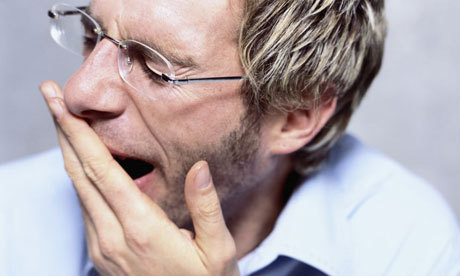
4. A person yawns


http://blog.lore.com/post/13929025602
  • Feel sleepy
  • Feel bored
  • Feel tired


5. A person shrugs his/her shoulder


http://www.capitalregionorthopaedics.com/educational_resources/neck_exercises.html
  • Show indifference
  • Show indecision
  • Feel unable to do anything
  • Indicate “I don’t know”


6. A person inhales quickly


http://breathxpress.wordpress.com/2011/03/20/response-reflexes-and-possible-reactions/
  • Feel surprised
  • Feel shocked
  • Feel frightened
  • Feel suffocated

 Non-verbal communication - The documentary 

This video is a short documentary about Non-verbal communication. In the video it is explained how non-verbal communication is important and some opinions are given by people from many different nationalities. People tell how they think about this type of communication and how they use it. In my view, non-verbal communication is very important. I think sometimes it can express my emotion better than verbal-communication especially when communicate with people who speak different language. It's a great way to help people understand each other without words.


 Reference 

http://www.usabilitypost.com/2010/02/07/the-laws-of-simplicity/
http://www.everythingesl.net/downloads/gestures_version02.pdf